

Lamma Island Eco Resort, Hong Kong
Masterplanning Hong Kong's First Passive House Tourism Development
| Location | Lamma Island, Hong Kong |
|---|---|
| Total Built Area | 170,212 m² |
| Scope | Masterplanning, Architecture & Interior Design, Sustainable & Specialist Design |
| Programme | Surf Lake, 250-Key Hotel, Health & Wellbeing Resort, Luxury Villas, Public Housing, Yacht Club, Sports Facilities, Boutique Retail, Primary School, Nursing Home, Public Pier |
Hong Kong’s Missing Destination
Hong Kong is one of the world's great cities with remarkable, largely unspoiled countryside sitting within reach of its urban core but yet to develop a destination of this kind: a world-class eco-hospitality offer capable of competing with the resorts of Vietnam, Thailand, or Bali.
When the Hong Kong Government released the Ex-Lamma Quarry site for expressions of interest, ŌDDD saw no reason why that should remain true, responding with a full masterplan to demonstrate what a world-first Passive House eco-tourism destination could look like, supported by independent ecological assessment, direct technical consultation with Surf Lakes on wave technology, and a preliminary cost plan by Currie & Brown.
A New Chapter for Lamma Island

Lamma Island has long been Hong Kong's quiet counterpoint, fishing villages along the waterfront, hiking trails through green hillsides, and a pace of life the city has largely forgotten. A 25-minute ferry from Central Pier, the island sits between the urban intensity of Hong Kong Island and the open South China Sea.

At the northern coast of Sok Kwu Wan, a former quarry site lies dormant. Rehabilitated in the early 2000s, the land left behind a striking man-made freshwater lake, formed from rainwater runoff collected in the quarry bowl, a kilometre-long shoreline, and a broad landscape framed by woodland and green slopes. A site shaped by industry, now ready to be shaped by intention.
Masterplanning Four Destination Zones

The EOI called for a place that could serve as both a local destination for Hong Kong residents and an internationally recognised eco-tourism resort, one that respects the island's existing characteristics while introducing new economic and social vitality.
While the government's focus centred on attracting mainland Chinese tourists, the design ambition reached further: a destination capable of drawing visitors internationally while remaining equally compelling for Hong Kongers seeking a day out, a corporate retreat, or an overnight escape.
The sports facilities, wellness resort, and surf lake were each chosen to extend dwell time, with the goal that visitors would find enough to fill a full day, and reasons to stay longer.
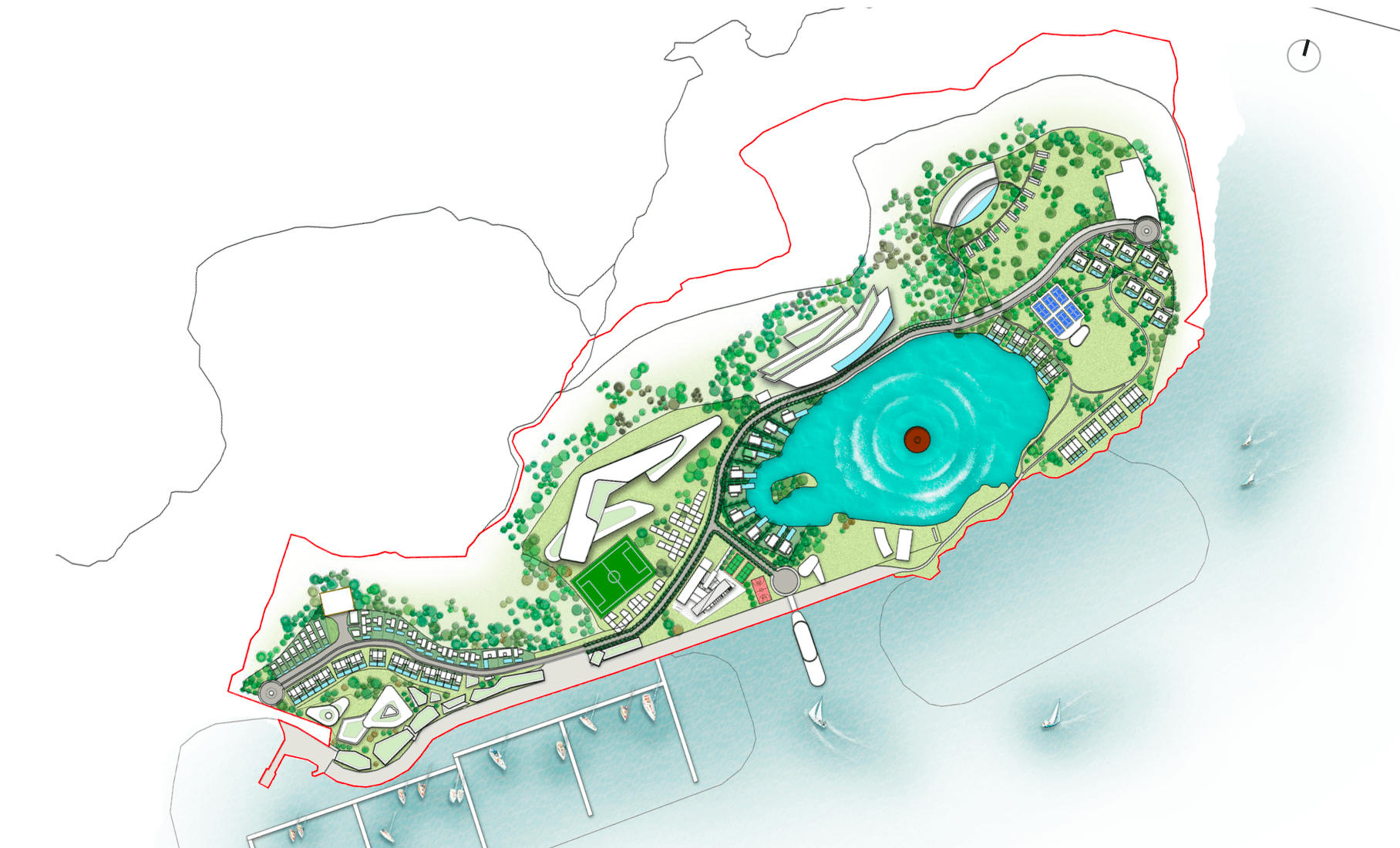
The masterplan organises over 170,000 m² of built area across 5 categories: luxury villas, hotel and hospitality, public amenities, public housing, and public buildings. Each zone responds to the natural landscape, lakeside, hillside, seaside, and forest, creating distinct character areas rather than a single homogeneous development.
The site is structured around 4 destination zones:
Surf Lake Hospitality Facilities: lakefront anchoring the 250-key hotel, lakeside villas, the surf lake and its event centre, harbour welcome centre, and padel courts.
Lamma Surf Lake Town Centre: lake shore forming the civic and recreational heart. The yacht club, tennis courts, basketball court, football astro pitch, and 38 boutique retail outlets operated by Lamma locals cluster here alongside the public pier.
Lamma Island Health and Wellbeing: the elevated zone, home to the Eden HK wellness resort, forest retreat studios, hillside and seaside villas.
Lamma Surf Lake Village: the residential neighbourhood, designed as a self-contained community with single dwellings, duplexes, and apartment buildings alongside the primary school, nursing home, and community retail.
The Surf Lake: Hong Kong's New Anchor

The centrepiece of the resort is the Hong Kong Surf Lake, a 52,100 m² wave-generating facility engineered within the former quarry's man-made freshwater lake. It is among the largest surf lake developments proposed globally, transforming the site's most unusual feature into a world-class recreational amenity.
Before proposing the conversion, ŌDDD consulted with an ecologist who had conducted the environmental review of the site. The lake supports no marine or freshwater ecosystem; it is rainwater runoff collected in a quarry bowl. Converting it to a surf lake would not displace any existing habitat.
ŌDDD sought technical advice from Surf Lakes, the Australian wave technology company, exploring their technology for the concept. The system works by raising a weighted platform on pistons at the centre of the lake, then releasing it. As the weight drops and displaces the water, the engineered lake bed spreads the energy outward, shaping it into a consistent wave. Varying the depth across different zones of the lake bed produces different wave profiles, allowing both professional and amateur surfers to use the facility at the same time across the different zones. This circular wave pattern is ideally suited to the quarry lake's contained geometry.


Adjacent to the surf lake, the Hong Kong Surf Lakes Event Centre includes a swimming pool, outdoor cinema, and clubhouse facilities. The concept references a bold architectural language: weathered silver-grey timber cladding with angular, folded roof forms, a material palette that reads as coastal and contemporary, distinct from the lake side hotel's warmer tones. A beach club at the lakefront serves as a transition to the evening social venue with open-air terraces and ambient lighting.


Eden HK: Health and Wellbeing Resort
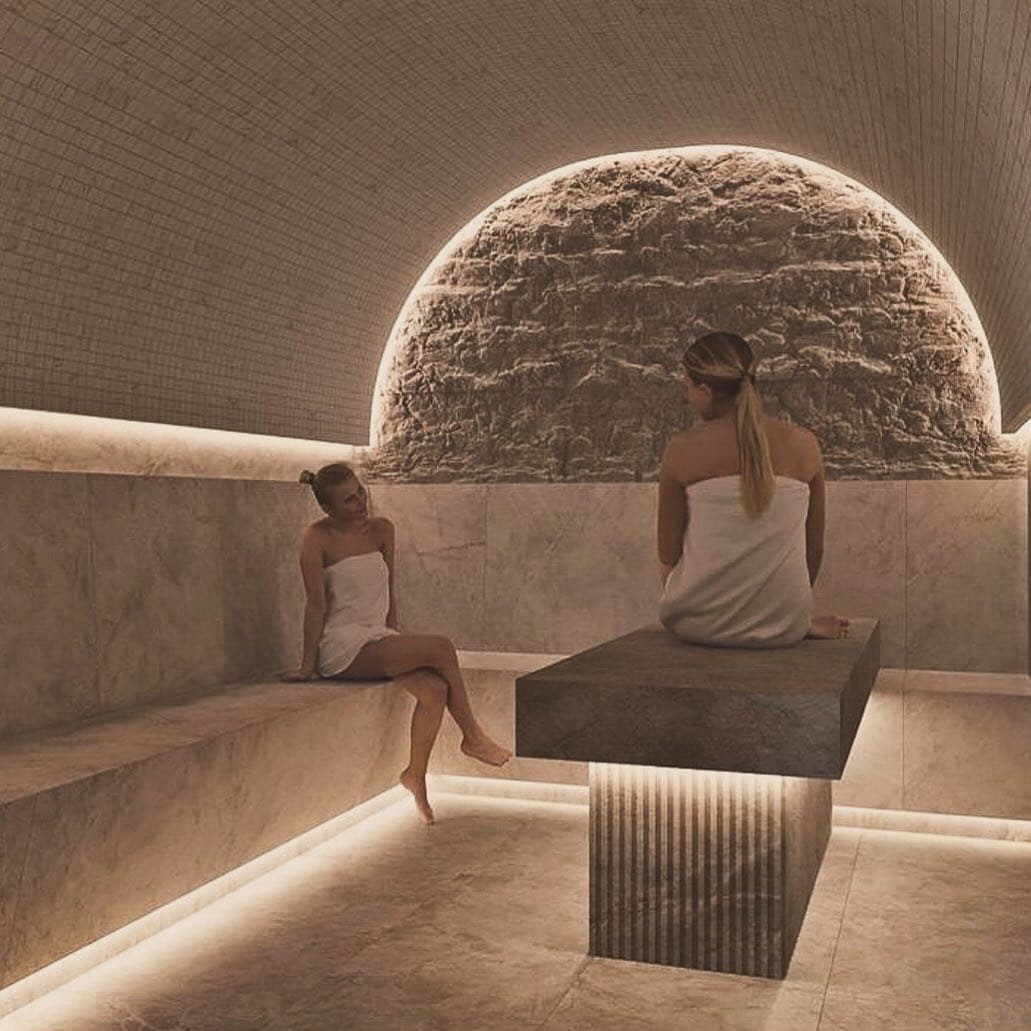

The Eden HK Health and Wellbeing Resort occupies 3,500 m² in the elevated zone, set within hillside woodland away from the surf lake. This separation is deliberate, designed for extended stays focused on recovery and immersion in the natural landscape.
But the retreat was not designed solely for international tourists. It was conceived to serve Hong Kong's corporate market: companies running midweek or weekend retreats, city professionals seeking a day's escape. The dual positioning, local corporate and international leisure, underpins the commercial viability of the wellness programme.
Eden, as in the Garden of, is designed as an entirely separate world from the rest of the resort: more secluded, quieter, and surrounded by greenery and natural landscape. Where the hotel and surf lake buzz with activity, Eden offers the opposite, a refuge from the pace of the city and the energy of the broader resort.
The architecture pursues a deliberate blurring of the threshold between interior and exterior, with materials, light, and spatial arrangement to draw the outdoors in. Timber, soft concrete, and warm directional lighting shape spaces that feel grown rather than built.
The wellness programme here runs the full spectrum of contrast therapy: yoga and Pilates studios, sauna, cold plunge, and steam rooms, offering a complete cycle of exertion and recovery within a single, secluded setting.


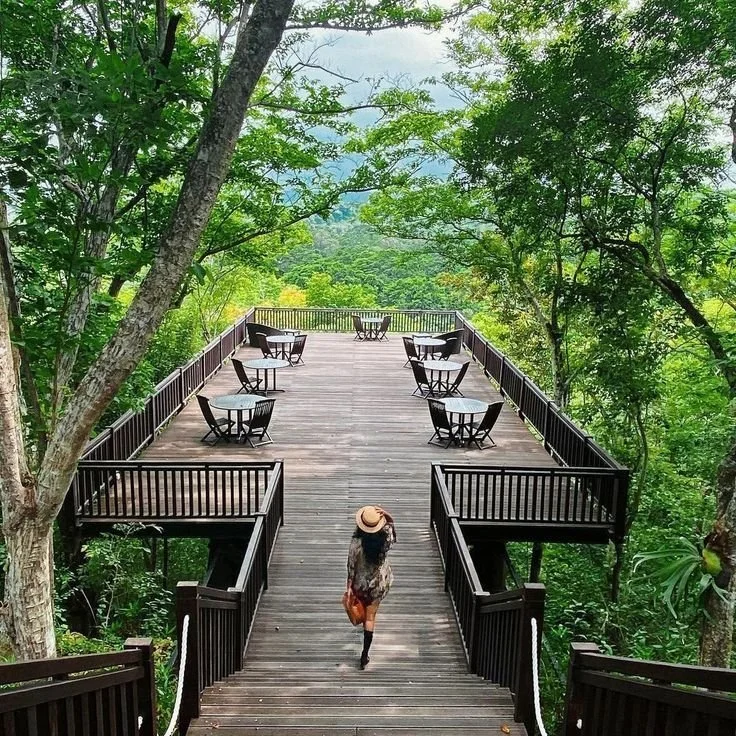
Ten Forest Retreat Studios (60 m² each) nestle within the tree canopy as intimate, secluded units embedded in the landscape. Connecting them to the wellness building and the wider masterplan is a tree canopy walkway, specifically requested by the Hong Kong Government as part of the site's public amenity offering. The walkway traverses the full length of the site from sea level to the elevated woodland zone and is open to all visitors, not only wellness guests.
The route takes visitors to a café platform that sits still within the trees, offering a place to pause.
Private Residences and Community


| Villa Type | Setting |
|---|---|
| Lake Side | Lakefront, facing surf lake |
| Lake Side Suplex | Lakefront, upper level |
| Hill Side | Elevated woodland |
| Sea Side Terraced | Harbour-facing, coastal |
| Forest Retreat Studios | Tree canopy, near Eden HK |
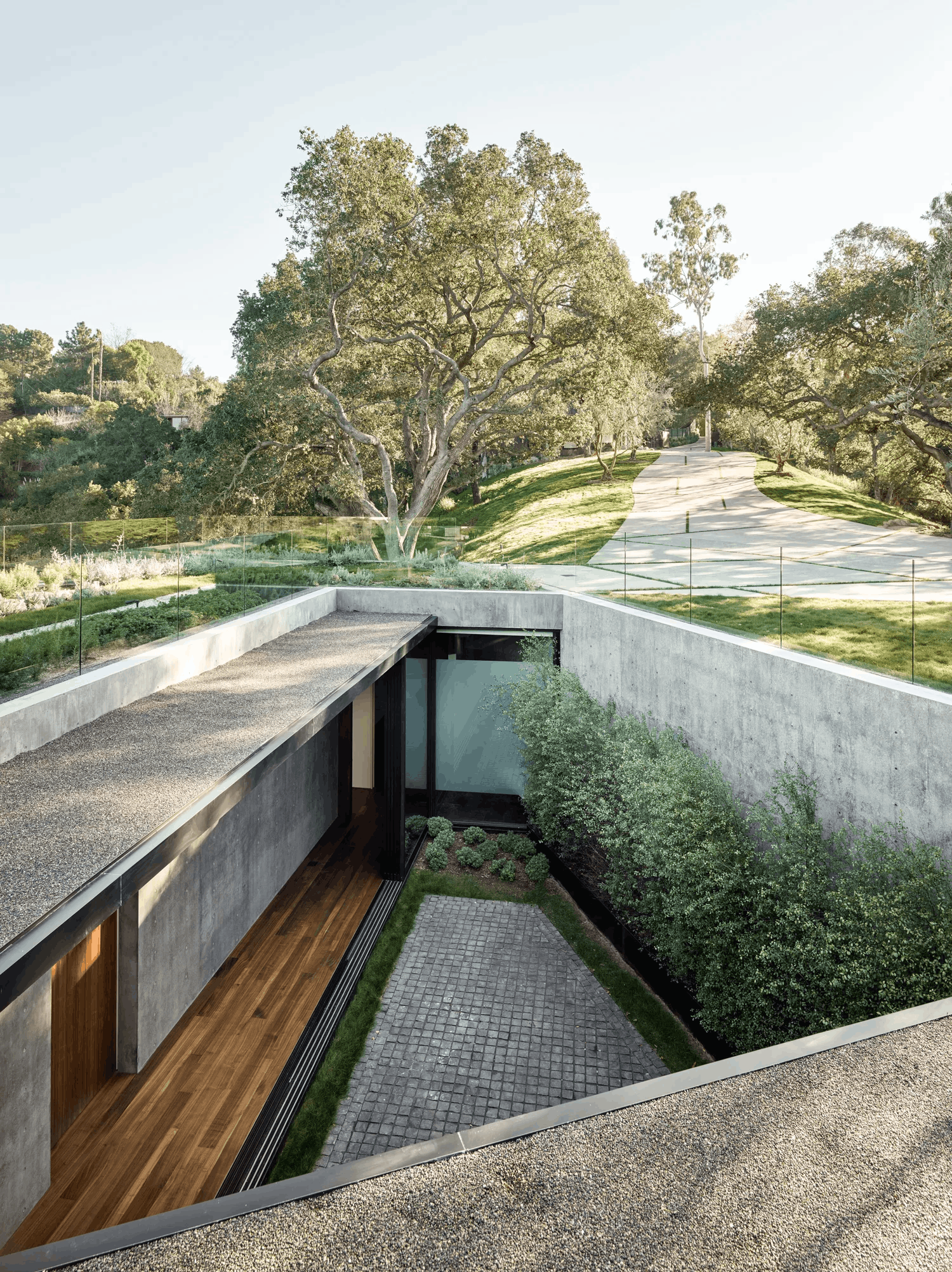
The design language across all villa types is contemporary modern, with an emphasis on openness and connection to the landscape. The lakeside villas, with outward views, are the most integrated to the broader resort: their infinity pools are designed so the water appears to merge with the surface of the surf lake beyond.
All villas are wrapped in dense planting that provides natural screening from the public areas of the resort, ensuring villa guests remain largely separate from day visitors.
The public housing component, 579 units totalling 70,300 m², is the single largest built programme category, exceeding the hotel and amenities combined. 19 single dwellings, 60 duplexes, and 500 apartments are concentrated in the Lamma Surf Lake Village. This is a genuine mixed community.
The primary school, nursing home, and public pier sit within the village, adjacent to the housing, with civic services at the heart of the residential community, not its periphery. Emergency, police, and waste management facilities are distributed to serve both resort and residential zones.


A Town, Not a Resort


The amenity programme reads less like a resort facilities list and more like the infrastructure of a small town: a yacht club, padel courts and clubhouse, tennis courts, basketball court, football astro pitch, a harbour welcome centre, and 38 boutique retail outlets.
Those 38 retail units are designated for operation by Lamma locals, covering arts, crafts, and food, as a deliberate strategy to ensure the development's economy flows into the island's existing community rather than around it. ŌDDD's design and build approach extends across the resort's amenity programme, from the surf lake clubhouse to the retail units, coordinating architecture, interiors, and delivery as a single process.
The Lamma Island Yacht Club anchors the harbour frontage, originally requested by the government to cater for visiting superyachts. In keeping with the development's eco positioning, the club would accommodate only sailing-capable vessels. The contradiction is deliberate: a superyacht destination that holds its guests to a cleaner standard.
The intent extends to the existing restaurants across the bay in Sok Kwu Wan, where seafood has been the settlement's primary identity for decades. The first commercial seafood restaurant opened in the 1970s, and the waterfront strip now draws Hong Kongers across the harbour daily. A short walk from the development site, the Tin Hau Temple, dating back to 1826, is a reminder that this coastline has been a destination long before any masterplan was drawn. Rather than competing with that heritage, the masterplan positions hospitality to complement it, drawing visitors to the island and onto the network of trails and waterfronts that connect the development to the wider Lamma community.

Sustainable and Specialist Design at Passive House Scale
Passive House reduces heating and cooling energy by up to 90%. Applying it to a single home is well understood. Applying it across 170,212 m² of hotel, residential, civic, and hospitality buildings in subtropical Hong Kong, where humidity and air conditioning dominate the energy profile, is something else entirely.
Every building in the masterplan is designed to meet Passive House certification. In practice, this means the wellness resort's MVHR system delivers continuously filtered, pollen-free air to treatment rooms and recovery suites, so the building's environmental performance becomes part of the guest experience. The hotel's high-performance glazing and airtight envelope allow floor-to-ceiling windows facing the surf lake without the thermal penalty that would normally follow.
The sustainability thinking extends beyond the buildings. ŌDDD explored wave energy generation using WaveBob technology: floating kinetic energy devices positioned on the northern edge of the bay, alongside the shipping lane that runs past Lamma Island. Ships utilising conventional fuel generate significant wake and mechanical wave energy. The WaveBob devices would harvest that energy, turning the byproduct of commercial shipping into clean power for the development. From the bad, some good.
At this scale, Passive House stops being a technical specification and becomes the development's defining characteristic. This is the reason the eco-tourism positioning is substance rather than label.
Connecting Resort, Island, and City
Lamma Island has no roads for private vehicles. Footpaths, waterfront promenades, and ferry connections form the entire transport network. The masterplan proposes a new public pier, providing direct ferry access and connecting the development to the broader Hong Kong network. Internal circulation is pedestrian-first, with landscaped paths, tree-lined promenades, and the elevated canopy walkway linking the wellness zone to the wider site.
The development is designed to integrate with Lamma's existing attractions: Sok Kwu Wan's seafood restaurants, the hiking trails to Lo So Shing Beach and the fishing villages.
Architecture and Interior Design: The Lake Side Hotel


The 250-key hotel occupies 15,000 m² on the hillside above the surf lake, the defining design move of the masterplan. The terraced form steps down the natural gradient toward the water, every room oriented to face the lake. A pool deck on the podium overlooks the surf lake, with the quarry rock face retained as a dramatic natural backdrop behind and above.
The material palette is warm, tactile, and grounded in the landscape. Dark-stained and natural timber cladding covering the terraces and corridors. Expressed concrete, retaining walls, and structural frames, provides weight against the use of lighter timber. Floor-to-ceiling glazing dissolves the boundary between interior and landscape, with bedrooms framed to place the lake directly at the foot of the bed.


Frequently Asked Questions
-
The Lamma Island Eco Resort is a proposed 170,212 m² mixed-use eco-tourism development on the ex-quarry site at Sok Kwu Wan, Lamma Island, Hong Kong. Masterplanned and designed by ŌDDD, it includes a 52,100 m² surf lake, 250-key hotel, health and wellbeing resort, luxury villas, public housing, a yacht club, sports facilities, boutique retail, a primary school, nursing home, and public pier.
-
The masterplan and architectural design were produced by ŌDDD Ltd (Ō Droma Design Development), an international architecture and masterplanning practice with offices in Hong Kong, Manchester, and Dublin. ŌDDD is a RIBA Chartered Practice and member of the Passivehaus Institut.
-
A surf lake uses a weighted platform raised on pistons at the centre of the lake and then released. As the weight drops and displaces the water, the engineered lake bed channels the energy into a consistent wave. Varying the depth across different zones creates different wave profiles simultaneously, with larger breaks for advanced surfers and gentler waves for beginners. The Lamma surf lake proposes to use Surf Lakes technology, allowing professional and amateur surfers to use the facility at the same time.
-
A surf lake uses a weighted platform raised on pistons at the centre of the lake and then released. As the weight drops and displaces the water, the engineered lake bed channels the energy into a consisaThe ex-Lamma Quarry was rehabilitated in the early 2000s after industrial use ceased. The man-made lake supports no marine or freshwater ecosystem; an independent ecological review confirmed it is rainwater runoff in a quarry bowl. The site's contained topography, existing lake, and proximity to Hong Kong Island make it uniquely suited for eco-resort development without displacing natural habitat.tent wave. Varying the depth across different zones creates different wave profiles simultaneously, with larger breaks for advanced surfers and gentler waves for beginners. The Lamma surf lake proposes to use Surf Lakes technology, allowing professional and amateur surfers to use the facility at the same time.
-
Passive House is a building energy standard that reduces heating and cooling requirements by up to 90% compared to conventional construction. Every building in the Lamma masterplan is designed to meet Passive House certification, making it the world's first Passive House multi-use development at this scale. In Hong Kong's subtropical climate, this dramatically reduces reliance on air conditioning while improving indoor air quality throughout hotels, residences, and public buildings.
-
Masterplanning is the process of designing the overall layout, zoning, infrastructure, and spatial relationships of a large-scale development. It determines how buildings, landscapes, transport routes, and public spaces relate to each other and to the surrounding context.
ŌDDD's masterplanning services cover site analysis, programme distribution, phasing, and integration with planning frameworks.
-
ŌDDD operates internationally with offices in Hong Kong, Manchester (UK), and Dublin (Ireland). The practice has completed projects across China, the UK, Ireland, Japan, Turkey, Singapore, Thailand, Cambodia, Indonesia, Vietnam, Macau, Palestine, the USA, and Australia, spanning residential, hospitality, commercial, leisure, and educational sectors.
-
ŌDDD provides five core services: Architecture & Interior Design, Design & Build, Development, Master Planning, and Sustainable & Specialist Design.